Top 6 compared
The best telescopes
A first proper look at the Moon’s craters and the planets, from the back garden or a dark field.

As an Amazon Associate we earn from qualifying purchases. It costs you nothing extra. How this works
The top 6 at a glance
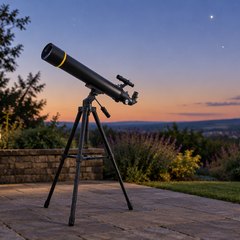
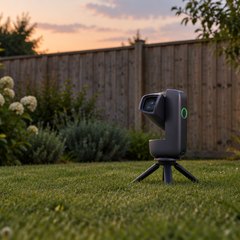
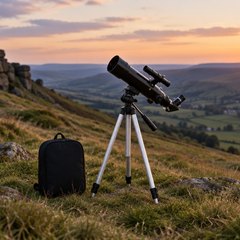
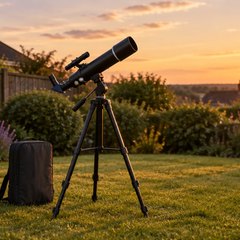
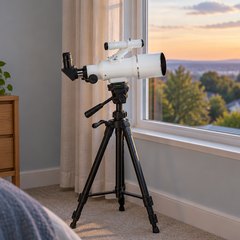
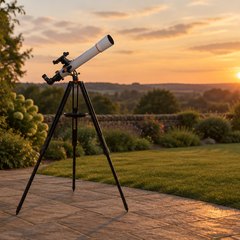
A telescope brings the Moon, the planets and star clusters close enough to see in detail. A refractor has a lens at the front of a tube and an eyepiece at the back; the wider the lens, or aperture, the more light it gathers and the fainter the objects it shows. A smart telescope has no eyepiece: it finds its targets and builds up photos on a phone or tablet.
Magnification is the telescope’s focal length divided by the eyepiece’s, so 400mm with a 10mm eyepiece gives 40x, and pushing it far beyond what the aperture can support only makes a dim view blurrier. The makers’ own rule: never look at the Sun through a telescope unless a proper solar filter is fitted over the front.
What matters
- At least two eyepieces, a low power and a higher one.
- A steady tripod that sets up at a comfortable height.
- A phone adapter, if you want photos of the Moon.
- A bag or backpack to carry the kit somewhere dark.
#1SOLOMARK 80mm Refractor Telescope (80/900) with Carry Bag
£100–£150
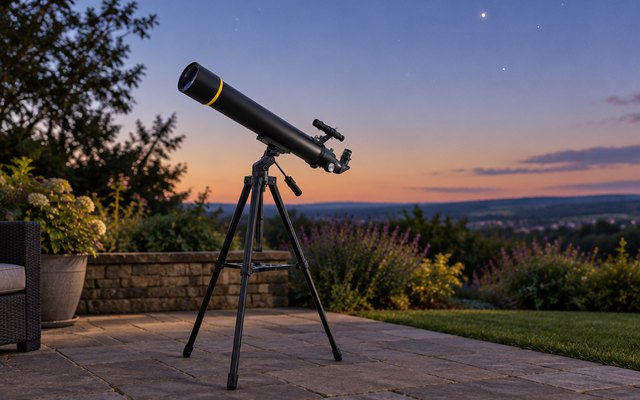
An 80mm lens on a long 900mm tube: the long focal length gives high power from ordinary eyepieces, 90x with the 10mm, which suits the Moon’s craters and the brighter planets. The tripod head has altitude and azimuth scales, and the whole kit, phone adapter included, packs into its carry bag.
What owners say: Owners call it a great first telescope, with impressively clear, close views, of the Moon especially, and like its sturdy build and carry case; it divides them, though, working well for some while others say theirs didn’t work at all.
A closer look: Line up the finderscope with the main tube in daylight, on a chimney or treetop a few hundred metres away, and night-time targets become far easier to find. At 900mm the tube is long, so stand the tripod on firm, level ground and give it a moment to settle after each nudge before you focus.
- 90x with the 10mm eyepiece
- Altitude and azimuth scales
- 5x24 finder with crosshair
Best for: The Moon and planets, close up
- Type
- Refractor
- Aperture
- 80mm
- Focal length
- 900mm
- Eyepieces included
- 20mm, 10mm
- Phone photos
- Phone adapter
- Carry bag
- Carry bag
#2DWARFLAB DWARF Mini Smart Telescope
£399 RRP
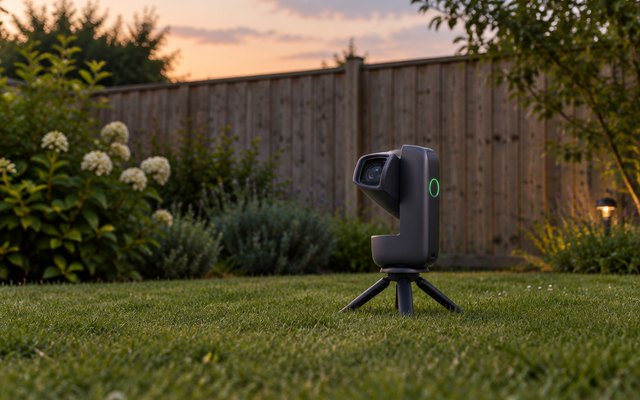
A smart telescope rather than one you look through: it finds its targets, tracks them and builds up photos of nebulae, galaxies and the Moon on a phone or tablet through DWARFLAB’s app, from a body that weighs 840g.
What owners say: Owners say it turns what used to be hours of setting up into a few minutes, and are amazed by the star clusters and nebulae it captures from something so small.
Heads up: There’s no tripod in the box: it works on any flat, steady surface, but EQ mode and the longest exposures need a tripod, such as DWARFLAB’s own, sold separately.
A closer look: A phone or tablet with DWARFLAB’s app is the screen and the controls, and a full charge lasts around four hours. Pictures sharpen the longer it gathers light, so give faint galaxies several minutes. Its light-pollution filter copes with a town sky, though a darker spot away from streetlights still shows more.
- Finds and tracks targets itself
- Built-in light-pollution filter
- Solar filter in the box
- Takes 90-second exposures
- Weighs 840g
Best for: Photographing deep space
- Type
- Smart telescope
- Aperture
- 30mm
- Focal length
- 150mm
- Eyepieces included
- None (views on a phone)
- Phone photos
- Built-in camera
- Carry bag
- No
#3Celestron Travel Scope 70 with Backpack
£99.99 RRP
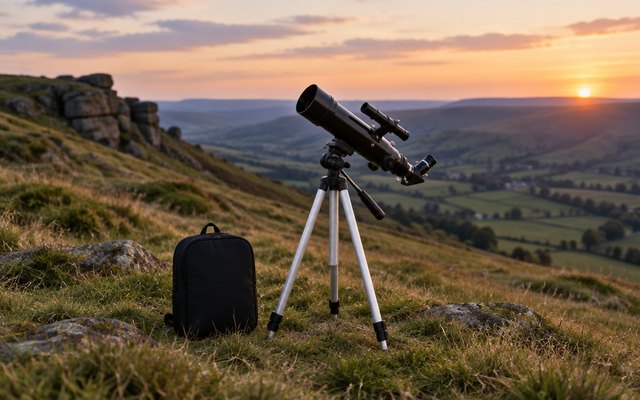
A grab-and-go 70mm refractor that packs into its own backpack with a full-height tripod, ready for camping trips and dark-sky sites. Celestron grew out of a telescope the engineer Tom Johnson built for his two sons; his firm started making telescopes in 1960.
What owners say: Owners like how fast it sets up, often in under a minute, and that the whole kit fits in the backpack; the tripod is the weak point, light and wobbly for some, and not everyone gets a clear view of distant things.
A closer look: Its erect-image diagonal shows the view the right way up, so by day it doubles as a spotting scope for birds and boats. The legs adjust from 56 to 132cm, short enough to stand it on a picnic table. There’s no phone adapter in the box, so add a universal one for photos of the Moon.
- Doubles as a spotting scope
- Tripod from 56cm to 132cm
- Shows the view upright
Best for: Birdwatching by day, stars by night
- Type
- Refractor
- Aperture
- 70mm
- Focal length
- 400mm
- Eyepieces included
- 20mm, 10mm
- Phone photos
- No
- Carry bag
- Backpack
#4EACONN 80mm Refractor Telescope (80/600) with Backpack
£50–£75
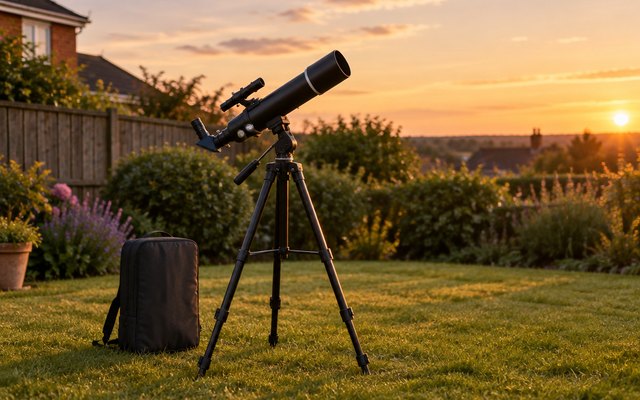
Its 80mm lens is as wide as the SOLOMARK’s but sits on a shorter 600mm tube, so the whole kit packs into its own backpack with the tripod. Two eyepieces give 30x and 66x, and the phone adapter is marked for each one, which makes lining up a photo of the Moon quicker.
What owners say: Owners find it well made, good value and simple to put together; the views divide them, clear for some and blurry for others, and some find the mount wobbly or awkward to adjust.
A closer look: Find the Moon with the 20mm eyepiece at 30x, then swap to the 9mm once it’s centred, since the closer view is narrower and harder to aim. Everything goes in the backpack, so it’s easy to take somewhere darker, away from streetlights.
- Magnifies 30x and 66x
- Adapter marked for each eyepiece
- 5x24 finderscope
Best for: First Moon photos with a phone
- Type
- Refractor
- Aperture
- 80mm
- Focal length
- 600mm
- Eyepieces included
- 20mm, 9mm
- Phone photos
- Phone adapter
- Carry bag
- Backpack
#5Bresser Classic 70/350 Refractor Telescope with Smartphone Holder
£125 RRP
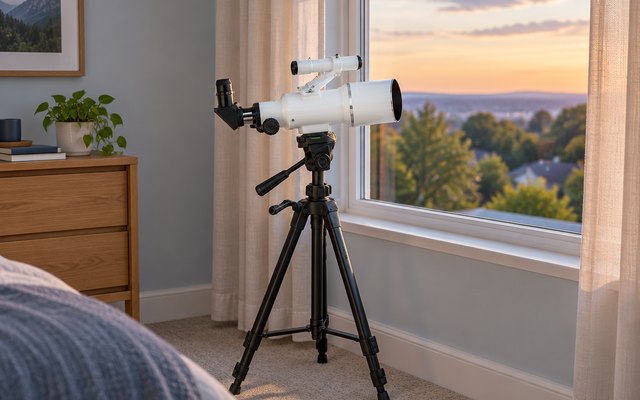
A short 350mm tube behind a 70mm lens gives a wide field of view, which suits sweeping along the Milky Way and taking in whole open star clusters, and the kit is light enough to carry out to a dark field. Three eyepieces and a smartphone holder for first photos of the Moon come with it.
What owners say: Owners rate the build and call it an excellent first telescope, easy to set up and use; views on how steady it stands are mixed.
A closer look: The carry bag is sized for the tripod, so give the tube, eyepieces and finder a padded box of their own when the kit travels in the car. The aluminium tripod runs from 73 to 160cm, low enough for a child or a seated viewer and tall enough to stand at.
- Shows whole open star clusters
- Tripod from 73 to 160cm
- 5x24 finder with crosshair
- Aluminium tripod
Best for: Wide, sweeping views of the stars
- Type
- Refractor
- Aperture
- 70mm
- Focal length
- 350mm
- Eyepieces included
- 20mm, 12.5mm, 4mm
- Phone photos
- Smartphone holder
- Carry bag
- Tripod bag
#6Celestron StarSense Explorer LT 70AZ
£150–£200
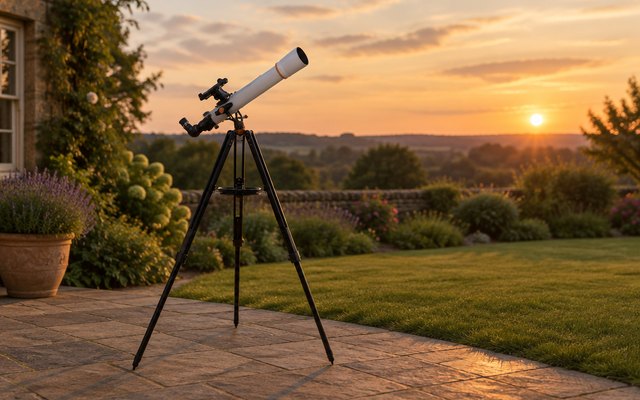
It uses your phone to find things: the phone sits in a dock on the tube, Celestron’s StarSense Explorer app recognises the stars overhead, and arrows on screen lead you to each planet, cluster or nebula, turning green when it’s in view. Underneath is a 70mm, 700mm refractor with two eyepieces and a 2x Barlow lens.
What owners say: Owners find it a friendly first telescope that’s quick to put together; some get clear views of the Moon, though one saw only a bright blob at high power, and not everyone finds it easy to use.
Heads up: The dock holds the phone for the app’s sky-finding; it isn’t an eyepiece adapter for photos.
A closer look: Fit a CR2032 button cell before the first night: the red dot finder runs on one, and it isn’t in the box. Start on the 25mm eyepiece at 28x, and save the Barlow for the Moon and planets on a steady, clear night.
- On-screen arrows lead to targets
- Phone dock on the tube
- Red dot finder
- Needs a CR2032 cell
- Tripod accessory tray
Best for: Finding your way round the sky
- Type
- Refractor, phone-guided
- Aperture
- 70mm
- Focal length
- 700mm
- Eyepieces included
- 25mm, 10mm, 2x Barlow
- Phone photos
- No
- Carry bag
- No
How they compare
Swipe sideways or rotate device to see all 6.
| Feature | #1SOLOMARK 80/900 | #2DWARF Mini | #3Celestron Travel Scope 70 | #4EACONN 80/600 | #5Bresser Classic 70/350 | #6Celestron StarSense LT |
|---|---|---|---|---|---|---|
| Best overall | Best smart telescope | Best budget | Best phone-guided | |||
| Picked Rating | 8.8 | 9.1 | 8.4 | 8.3 | 8.2 | 8.1 |
| Price | £100–£150 | £399 RRP | £99.99 RRP | £50–£75 | £125 RRP | £150–£200 |
| Type | Refractor | Smart telescope | Refractor | Refractor | Refractor | Refractor, phone-guided |
| Aperture | 80mm | 30mm | 70mm | 80mm | 70mm | 70mm |
| Focal length | 900mm | 150mm | 400mm | 600mm | 350mm | 700mm |
| Eyepieces included | 20mm, 10mm | None (views on a phone) | 20mm, 10mm | 20mm, 9mm | 20mm, 12.5mm, 4mm | 25mm, 10mm, 2x Barlow |
| Phone photos | Phone adapter | Built-in camera | No | Phone adapter | Smartphone holder | No |
| Carry bag | Carry bag | No | Backpack | Backpack | Tripod bag | No |
| Best for | The Moon and planets, close up | Photographing deep space | Birdwatching by day, stars by night | First Moon photos with a phone | Wide, sweeping views of the stars | Finding your way round the sky |
| Buy now | Amazon | Amazon | Amazon | Amazon | Amazon | Amazon |
Photos are illustrative, some computer-generated. As an Amazon Associate we earn from qualifying purchases. It costs you nothing extra. Certain content that appears on this site comes from Amazon. This content is provided ‘as is’ and is subject to change or removal at any time. How we pick · How this works.


