Top 5 compared
The best stud finders
Hang a TV, a shelf or a heavy mirror on drywall without guessing where the studs are.
As an Amazon Associate we earn from qualifying purchases. It costs you nothing extra. How this works
The top 5 at a glance

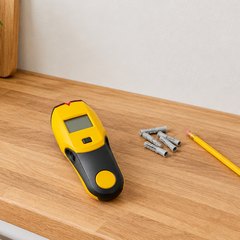
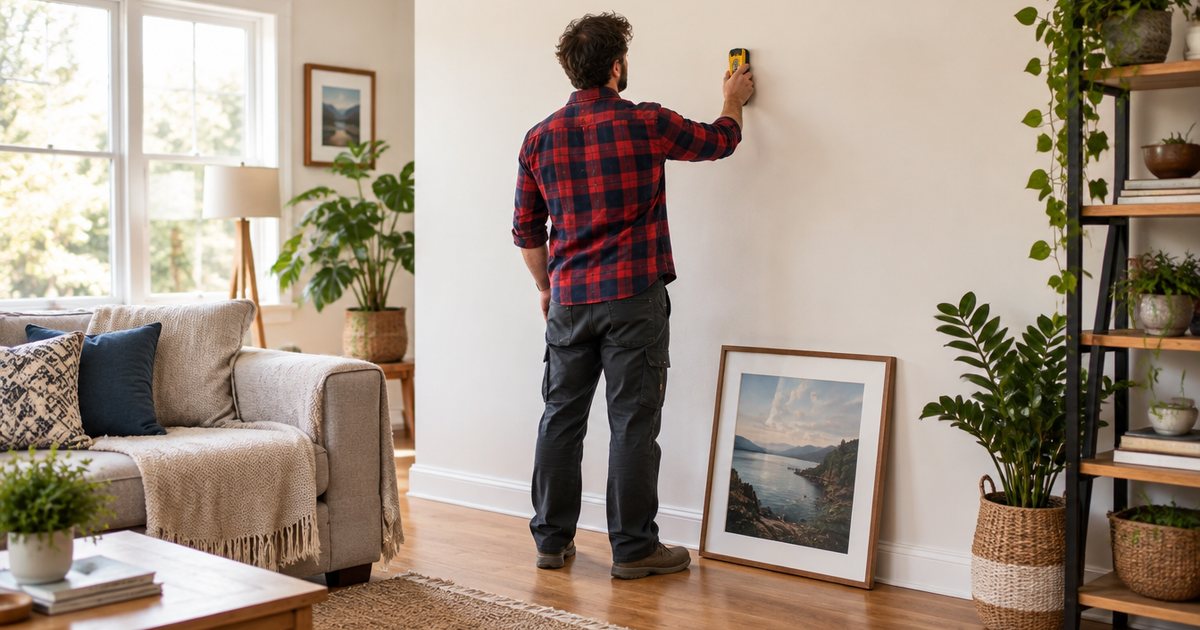
A stud finder is for hollow walls: drywall fixed to a frame of wood or metal studs. Screws hold best driven into a stud, and before drilling it matters just as much to know where wires run behind the drywall. Magnetic finders simply stick where the drywall screws are; electronic ones sense the change in density as they slide over a stud.
Each electronic finder here also warns of live wires. Zircon says its own warning picks up live, unshielded wiring, so a wire that’s switched off won’t register on it. Electronic finders run on batteries, often not in the box; a magnetic finder needs none, and warns of nothing.
What matters
- A readout that shows the stud’s center, not just one edge.
- A deeper scan, for walls thicker than ordinary drywall.
- Whether it must be calibrated off a stud before each scan.
- Which batteries it takes, and whether rechargeables work.
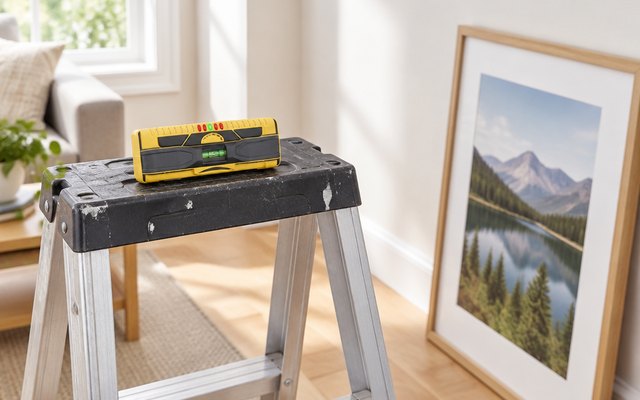
#1Franklin Sensors ProSensor M210
$50–$75
Thirteen sensors under a row of 21 LEDs light up the whole width of a stud at once, double studs included, up to 1.7 inches deep, with no calibration: press the button and start scanning anywhere, even over a stud. A bubble level is built in for marking straight.
What owners say: Accurate on studs and live wires, with the whole width of each stud shown at a glance. Some doubt it’s worth paying more than for a simpler finder, and a few have had one break after a drop.
A closer look: Hold the button down and slide it along the wall: the LEDs light across the whole stud and the middle one turns green over its center, the spot to mark for a screw. It takes two AA batteries, which aren’t in the box; rechargeables work too.
- Finds double studs too
- Green LED marks the center
- No calibration needed
- Built-in bubble level
- Rechargeables work too
Best for: Seeing the whole stud
- Wooden studs
- Yes
- Metal scan
- No
- Live-wire warning
- Yes
- Stud depth
- Up to 1.7 in
- Batteries
- 2 x AA, not included
- Display
- 21 LEDs
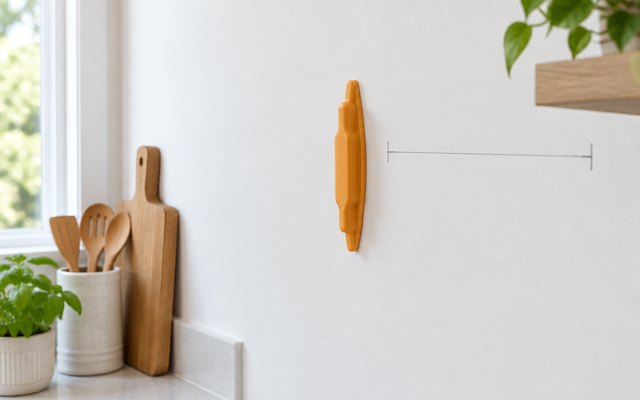
#2The StudBuddy Magnetic Stud Finder
Under $10
No batteries and nothing to calibrate: slide it across the wall and its neodymium magnets stick where the screws or nails go into a stud, then it hangs there while you mark the spot or put something up.
What owners say: Reliable even on 1960s drywall, by owners’ accounts, and with no batteries to die it earns a permanent place in the toolbox. Magnet strength is the split: very strong for some, too weak to stick for others.
A closer look: Drywall is screwed along the length of each stud, so once it sticks, slide it up or down to find the next screw and confirm the line. It’s made for drywall, not older lath and plaster, and it won’t warn of wires or pipes.
- Magnets find the screws
- Hangs on the wall
- Made for drywall, not plaster
- Made in the USA
Best for: Drywall, with no batteries to run down
- Wooden studs
- Via screws and nails
- Metal scan
- No
- Live-wire warning
- No
- Stud depth
- Screws under drywall
- Batteries
- None needed
- Display
- None (magnetic)
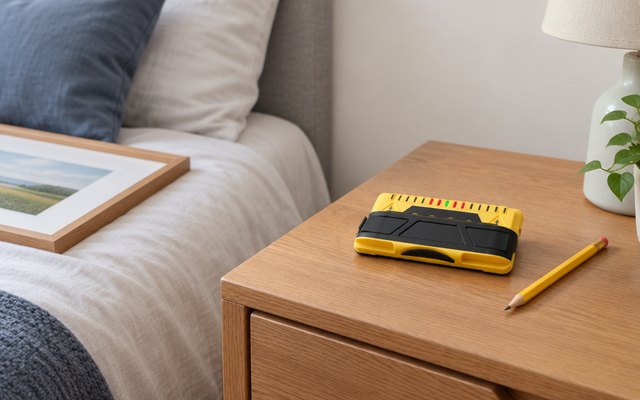
#3Franklin Sensors ProSensor M150
$30–$50
The M210’s smaller, cheaper sibling works the same way: nine sensors under a row of 15 LEDs show the whole width of a stud at once, double studs included, up to 1.5 inches deep, and there’s no calibration, so a scan can start anywhere, even over a stud.
What owners say: Owners find it reliable at pinning down the center of a stud and the wiring behind the drywall, and easy enough to use one-handed.
Heads up: It needs two alkaline AAA batteries, which aren’t included; Franklin says rechargeables won’t work.
A closer look: Double studs, common beside doors and windows, show up as a wider band of lit LEDs, a good spot for something heavy. It reads 1.5 inches deep against the M210’s 1.7, which is plenty for ordinary drywall; the bigger model suits thicker walls.
- Shows double studs
- No calibration needed
- Green center LED
- 9 sensors
- Not for rechargeable batteries
Best for: Hanging shelves on ordinary walls
- Wooden studs
- Yes
- Metal scan
- No
- Live-wire warning
- Yes
- Stud depth
- Up to 1.5 in
- Batteries
- 2 x AAA, not included
- Display
- 15 LEDs
#4JAXWQ TH410 Stud Finder
$10–$20
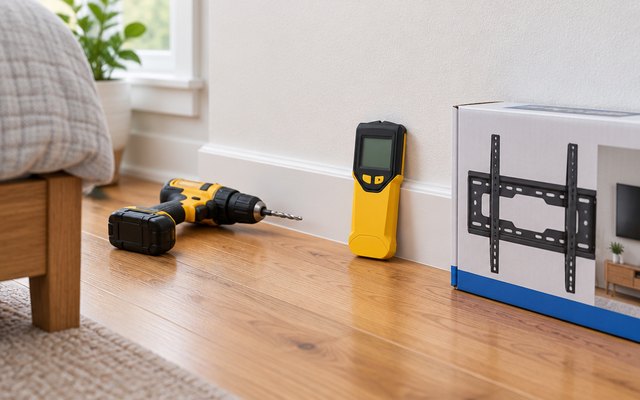
A backlit screen with a center arrow, three stud-scan depths down to 1½ inches, a metal scan to 2.36 inches and a live-wire warning in every mode, with the 9V battery in the box.
What owners say: The screen is simple to read, and it pins down a stud’s edges and middle accurately, which helped at least one owner mount a TV.
A closer look: Press the power button with it flat on the wall, hold the scan button until it beeps, then let go and slide slowly. A steady beep and the CENTER marker on the screen show the middle of a stud; mark it in pencil and scan back the other way to check.
- Center arrow on the screen
- Beeps over the stud center
- Three stud-scan depths
- Wire warning in every mode
Best for: Scanning for metal and live wires
- Wooden studs
- Yes
- Metal scan
- Yes
- Live-wire warning
- Yes
- Stud depth
- Up to 1½ in
- Batteries
- 9V, included
- Display
- Backlit LCD
#5Zircon StudSensor A100
$30–$50
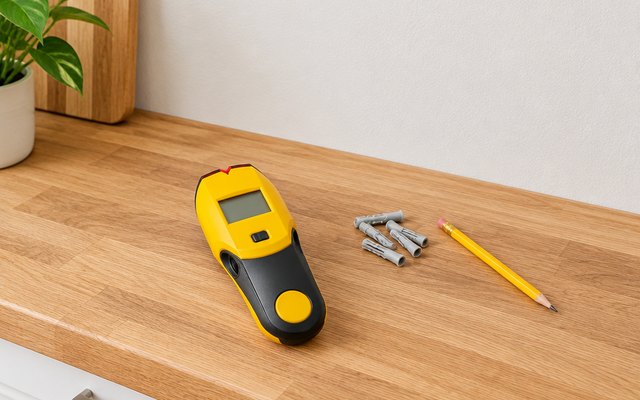
Zircon’s straightforward stud sensor finds both edges of a wood or metal stud through ¾ inch of wall, or 1½ inches in DeepScan, warns of live wires in both modes and lights the spot with its SpotLite. Zircon made the first electronic stud finders, from a 1977 design that used a capacitor to sense changes in a wall’s density.
What owners say: Plenty of owners call it reliable, but accuracy is where they part ways: some get clean, consistent readings, others erratic ones or missed studs, and opinion on value is just as divided.
Heads up: Calibrate it away from a stud: hold it flat on the wall, press and hold until the single beep, then slide slowly.
A closer look: Mark one edge, then scan in from the other side and mark the second; the stud’s center sits halfway between. It runs on one 9V battery, not included, and Zircon asks for a fresh alkaline one, so the on-screen warning when power gets low is worth heeding.
- Finds both stud edges
- Wire warning in both modes
- Audio tone
- Low-battery warning
Best for: Edge finding with a wire warning
- Wooden studs
- Yes
- Metal scan
- No
- Live-wire warning
- Yes
- Stud depth
- Up to 1½ in (DeepScan)
- Batteries
- 9V, not included
- Display
- LCD, light pointer
How they compare
Swipe sideways or rotate device to see all 5.
| Feature | #1Franklin M210 | #2StudBuddy | #3Franklin M150 | #4JAXWQ TH410 | #5Zircon A100 |
|---|---|---|---|---|---|
| Best overall | Best budget | Most scan modes | |||
| Picked Rating | 9.0 | 8.9 | 8.8 | 8.6 | 8.5 |
| Price | $50–$75 | Under $10 | $30–$50 | $10–$20 | $30–$50 |
| Wooden studs | Yes | Via screws and nails | Yes | Yes | Yes |
| Metal scan | No | No | No | Yes | No |
| Live-wire warning | Yes | No | Yes | Yes | Yes |
| Stud depth | Up to 1.7 in | Screws under drywall | Up to 1.5 in | Up to 1½ in | Up to 1½ in (DeepScan) |
| Batteries | 2 x AA, not included | None needed | 2 x AAA, not included | 9V, included | 9V, not included |
| Display | 21 LEDs | None (magnetic) | 15 LEDs | Backlit LCD | LCD, light pointer |
| Best for | Seeing the whole stud | Drywall, with no batteries to run down | Hanging shelves on ordinary walls | Scanning for metal and live wires | Edge finding with a wire warning |
| Buy now | Amazon | Amazon | Amazon | Amazon | Amazon |
Photos are illustrative, some computer-generated. As an Amazon Associate we earn from qualifying purchases. It costs you nothing extra. How we pick · How this works.


