Top 5 compared
The best telescopes
A first look at the Moon’s craters and the planets from the backyard, on any clear night.

As an Amazon Associate we earn from qualifying purchases. It costs you nothing extra. How this works
The top 5 at a glance
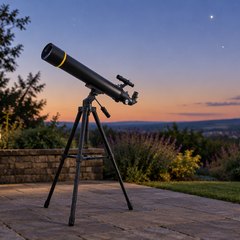
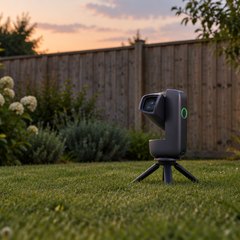
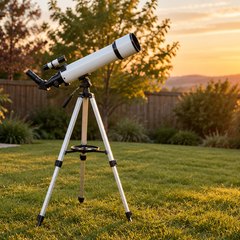
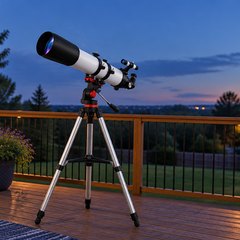
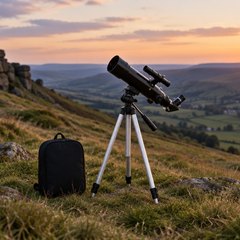
A telescope brings the Moon, the planets, star clusters and bright nebulae close enough to see. A refractor is a tube with a lens at the front, on a tripod: you look through a small eyepiece and swap eyepieces to change the magnification. A smart telescope has no eyepiece; it finds and tracks its targets and builds up the picture on a phone or tablet.
Each refractor here comes with two eyepieces and a carry bag, and most with a phone adapter. Magnification is the tube’s focal length divided by the eyepiece’s, and pushed past what the lens supports, the view gets dimmer and blurrier. One rule from the makers: never look at the Sun through a telescope unless a proper solar filter is fitted over the front.
What matters
- A wide aperture, the lens width, for brighter, sharper views.
- A long focal length for planets, a short one for star fields.
- A steady tripod; a wobbly one shakes the view.
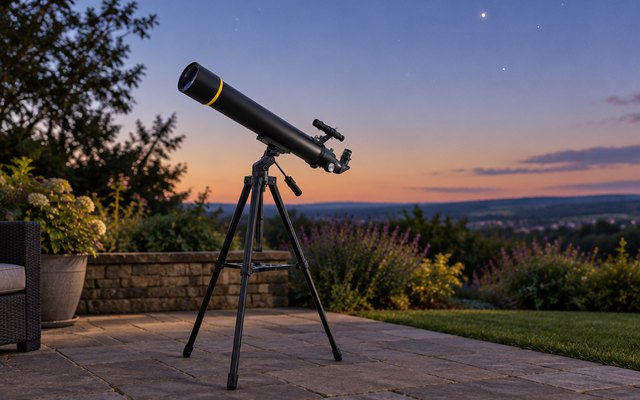
#1SOLOMARK 80mm Refractor Telescope (80/900)
$75–$100
A long 900mm tube that suits close views of the Moon’s craters and the planets through an 80mm lens, with two wide-angle eyepieces, an erect-image diagonal, a phone adapter and a bag that holds the lot.
What owners say: Beginners find it easy to put together, and the views are clear enough to pick out Saturn’s rings. Its size and how well it performs split opinion, though.
A closer look: Find a target with the 20mm eyepiece first, then swap to the 10mm once it’s centered, since the closer view is narrower and harder to aim. The altitude and azimuth scales on the mount make it easier to come back to a favorite object, and the long tube is steadiest in a sheltered spot out of the wind.
- Shows views right way up
- Finder scope for aiming
- Scales help relocate favorite objects
Best for: The Moon and planets up close
- Type
- Refractor
- Aperture
- 80mm
- Focal length
- 900mm
- Eyepieces included
- 20mm, 10mm
- Phone photos
- Phone adapter
- Carry bag
- Yes
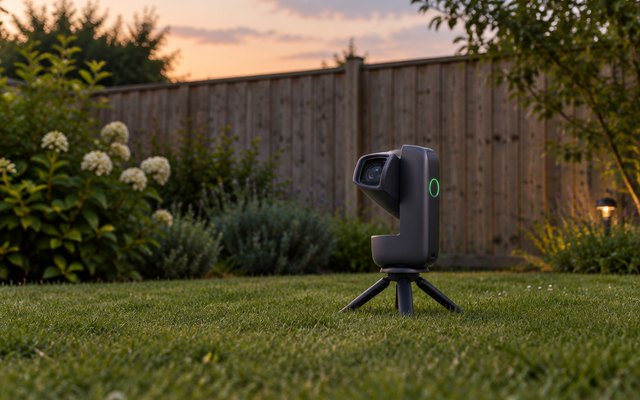
#2DWARFLAB DWARF Mini Smart Telescope
Over $300
A smart telescope rather than one you look through: it finds its targets, tracks them and builds up photos of nebulae, galaxies and the Moon on a phone or tablet through DWARFLAB’s app, from a body that weighs 30 oz.
What owners say: Out of the box and shooting in minutes, it impresses owners with how much of the galaxies, nebulae and Moon it captures from something so small. A few struggled to get it activated in the app.
Heads up: There’s no tripod in the box: it works on any flat, steady surface, but EQ mode and the longest exposures need a tripod, such as DWARFLAB’s own, sold separately.
A closer look: A phone or tablet with DWARFLAB’s app is the screen and the controls, and a full charge lasts around four hours. Pictures sharpen the longer it gathers light, so give faint galaxies several minutes. Its light-pollution filter copes with a town sky, though a darker spot away from streetlights still shows more.
- Finds and tracks targets itself
- Built-in light-pollution filter
- Solar filter in the box
- About 4 hours per charge
- Weighs 30 oz
Best for: Photographing deep space
- Type
- Smart telescope
- Aperture
- 30mm
- Focal length
- 150mm
- Eyepieces included
- None (views on a phone)
- Phone photos
- Built-in camera
- Carry bag
- No
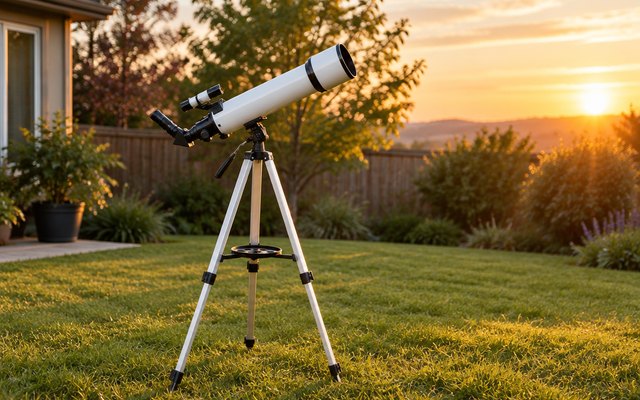
#3Koolpte 80mm Refractor Telescope (AZ80600)
$75–$100
An 80mm refractor on a 600mm tube, with a 3x Barlow lens that triples the power of both eyepieces, a phone adapter and a wireless remote for taking pictures through the eyepiece without nudging the telescope.
What owners say: Crisp views of the Moon come up again and again, along with how easy it is for a first-timer or a child to set up and point. It folds down into a compact carrying bag, too.
A closer look: For phone pictures of the Moon, clamp the phone in the adapter over the 25mm eyepiece and fire the shutter with the remote rather than the screen, which keeps everything still. Add the Barlow only once a target is centered, since higher power makes the view dimmer.
- Sets up without tools
- Finder scope for aiming
- Aluminum tripod
Best for: Phone snapshots with no shake
- Type
- Refractor
- Aperture
- 80mm
- Focal length
- 600mm
- Eyepieces included
- 25mm, 10mm, 3x Barlow
- Phone photos
- Adapter and remote
- Carry bag
- Yes
#4MEEZAA 90mm Refractor Telescope (90/800)
$150–$200
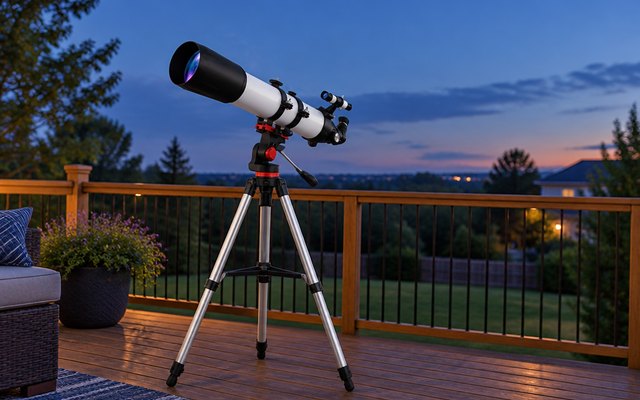
The widest lens here at 90mm, on a long 800mm tube for close views of the Moon’s craters and the planets, with two eyepieces, a 3x Barlow lens, a phone adapter and a steel tripod that adjusts from 28 to 46 in.
What owners say: The Moon’s craters come through sharp and clear, and the tripod holds steady; kids and adults both enjoy it. Lining it up is where some struggle.
Heads up: The finder needs lining up with the main tube before the first night: do it in daylight on a distant treetop, or faint targets are hard to find.
A closer look: The tripod tops out at 46 in, which suits viewing from a lawn chair more than standing. Start each session with the 25mm eyepiece for the widest, brightest view, and keep the Barlow for the Moon on a steady night.
- Steel tripod adjusts 28–46 in
- Accessory tray on the tripod
- Suits viewing from a chair
Best for: Seated stargazing in the backyard
- Type
- Refractor
- Aperture
- 90mm
- Focal length
- 800mm
- Eyepieces included
- 25mm, 10mm, 3x Barlow
- Phone photos
- Phone adapter
- Carry bag
- Yes
#5Celestron Travel Scope 70 with Backpack
$75–$100
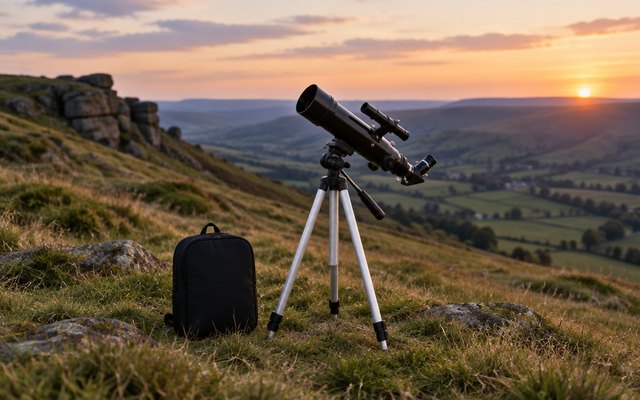
A grab-and-go 70mm refractor that packs into its own backpack with a full-height tripod, ready for camping trips and dark-sky sites. Celestron grew out of a telescope the engineer Tom Johnson built for his two sons; his firm started making telescopes in 1960.
What owners say: It goes together quickly and carries easily into the field, and many see it as a good first scope for children. The catches: a very wobbly tripod, and some never got a clear view.
A closer look: Its erect-image diagonal shows the view the right way up, so by day it doubles as a spotting scope for birds and boats. The legs adjust from 22 to 52 in, short enough to stand it on a picnic table. There’s no phone adapter in the box, so add a universal one for photos of the Moon.
- Tripod adjusts 22–52 in
- Shows views right way up
- Doubles as a spotting scope
Best for: Campsites and birdwatching by day
- Type
- Refractor
- Aperture
- 70mm
- Focal length
- 400mm
- Eyepieces included
- 20mm, 10mm
- Phone photos
- No
- Carry bag
- Backpack
How they compare
Swipe sideways or rotate device to see all 5.
| Feature | #1SOLOMARK 80/900 | #2DWARF Mini | #3Koolpte 80/600 | #4MEEZAA 90/800 | #5Celestron Travel Scope 70 |
|---|---|---|---|---|---|
| Best overall | Best smart telescope | Best for phone photos | Biggest aperture | Best for travel | |
| Picked Rating | 8.8 | 8.9 | 8.6 | 8.4 | 8.2 |
| Price | $75–$100 | Over $300 | $75–$100 | $150–$200 | $75–$100 |
| Type | Refractor | Smart telescope | Refractor | Refractor | Refractor |
| Aperture | 80mm | 30mm | 80mm | 90mm | 70mm |
| Focal length | 900mm | 150mm | 600mm | 800mm | 400mm |
| Eyepieces included | 20mm, 10mm | None (views on a phone) | 25mm, 10mm, 3x Barlow | 25mm, 10mm, 3x Barlow | 20mm, 10mm |
| Phone photos | Phone adapter | Built-in camera | Adapter and remote | Phone adapter | No |
| Carry bag | Yes | No | Yes | Yes | Backpack |
| Best for | The Moon and planets up close | Photographing deep space | Phone snapshots with no shake | Seated stargazing in the backyard | Campsites and birdwatching by day |
| Buy now | Amazon | Amazon | Amazon | Amazon | Amazon |
Photos are illustrative, some computer-generated. As an Amazon Associate we earn from qualifying purchases. It costs you nothing extra. How we pick · How this works.